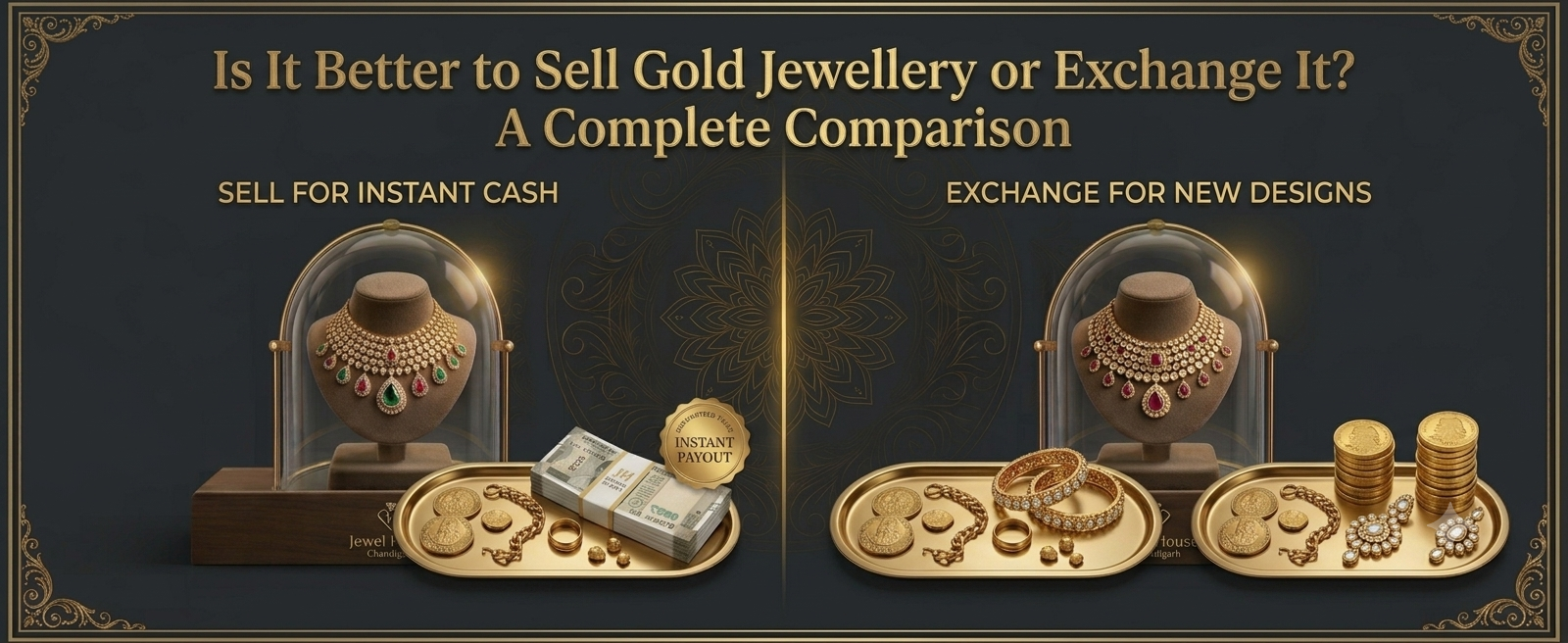
Old gold has a habit of disappearing. Then one day gold prices hit a new high, and that broken chain or outdated bangle suddenly feels like real money. That’s when the big question hits: should you sell your gold jewellery for cash, or exchange it for a new piece?
Both put your idle gold to work, but they lead to very different outcomes. One hands you money; the other hands you a fresh design. If you have the doubt, “Should I sell or exchange gold?, read this guide to know the real difference in value, charges, taxes, and timing so you can pick the best option for old jewellery that actually fits your goal, not someone else’s sales pitch.
What Does “Selling Gold” Mean?
Selling gold means handing over your old jewellery, coins, or scrap and walking out with cash. The buyer checks two things that decide everything based on purity (karat) and weight and then applies the day’s gold rate.
- You get money directly, no strings attached.
- Payment can be cash or bank transfer.
- Once sold, the gold is no longer yours.
- Best when you need funds, not another ornament.
What Does “Exchanging Gold” Mean?
Exchanging means using your old gold’s value against a new piece you buy from the same jeweller. Instead of cash, you get a discount on your new purchase.
- Your old gold’s value is adjusted into the new bill.
- You usually still pay for making charges on the new design.
- You continue to hold gold, but in a new form.
- Best if you were already planning to buy jewellery.
The Comparison: Gold Exchange vs Cash
1. How Much Money Do You Get?
When you sell, you receive close to the actual gold value (purity × weight × current rate), minus a small buyer margin. When you exchange, the “value” often looks generous, but it’s tied to a new purchase where you pay fresh making charges and GST. So the headline number can mislead you.
2. The Making Charges Trap
Here’s what most people miss. You already paid making charges when you first bought the jewellery, and they are never refunded during a sale or an exchange. In a jewellery exchange, you then pay making charges again on the new piece. Sell once, and you avoid that second hit.
3. Flexibility
Cash goes anywhere. Bills, emergencies, investment, or buying gold later. Exchange locks you into one jeweller’s designs and stock. If nothing there excites you, your value stays stuck.
4. Taxes (GST)
In an exchange, GST is generally charged on the new jewellery you buy, not on the old gold you give. Selling gold for cash usually doesn’t attract GST for you as the seller. Always check the invoice before signing.
5. Purity Checks and Deductions
Both routes test purity the same way. But some jewellers quietly deduct “refining” or “wastage” charges. A transparent buyer explains every number in front of you.
When Selling Makes More Sense
- You need cash for old gold for an emergency, bill, or investment.
- You want the highest usable value with no forced purchase.
- You don’t plan to buy jewellery right now.
- You want full freedom over what to do with the money.
When Exchanging Makes More Sense
- You’re already buying new jewellery for a wedding or festival.
- Your old design is outdated, and you want a modern one.
- You want to keep your wealth locked in gold form.
- You’re upgrading a family piece into something you’ll actually wear.
In India, 25–30% of jewellery purchases involve some form of old gold exchange, especially during wedding and festive seasons, so this route is more common than people think.
Which One Gives You More Money?
Straight answer: selling usually puts more usable money in your hand. Exchange values look higher on paper, but they’re wrapped inside a new bill loaded with making charges and GST. If pure value is your goal, cash wins.
If you genuinely want new jewellery, exchange can still be worth it. Whether to sell gold or exchange gold depends on your circumstances.
Quick Decision Checklist
Ask yourself one honest question: do I want money or a new ornament?
- Want money → Sell.
- Want a new piece → Exchange.
- Not sure → Sell now, buy later when you find the right design.
Tips Before You Decide
- Check today’s gold rate before visiting any shop.
- Never accept the first offer—ask for the full breakdown.
- Carry your purchase bill if you have it (helpful, not mandatory).
- Choose a buyer who tests your gold in front of you.
To Sum Up
There’s no single winner here, only the right fit for your goal. Sell when you want cash and freedom; exchange when you truly want new jewellery. Just make sure you understand purity, weight, charges, and taxes before you sign anything.
Looking for the best deal in Chandigarh? Jewel House, Chandigarh, is a trusted name with 30+ years in the gold business. They pay the highest price for your gold, run a completely hassle-free process, and work with full transparency, so you walk away with 100% satisfaction. For honest advice and top value on old, broken, or scrap gold, Jewel House is the smart choice.
FAQs
- Is it better to sell gold or exchange it?
It depends on your goal. Sell if you need cash and full flexibility. Exchange only if you’re genuinely buying new jewellery. For pure value, selling usually leaves more money in your hand.
- Which option gives more money?
Selling generally gives more usable money. Exchange values seem higher, but they’re tied to a new purchase with making charges and GST added, which quietly reduces your real benefit.
- Should I exchange my old jewellery?
Yes, but only if you already plan to buy new jewellery, especially for a wedding or festival. If you just want cash without buying anything, selling is the smarter move.
- How is old gold exchange value calculated?
It’s based on your gold’s purity, net weight, and the current market rate. Some jewellers may deduct refining or wastage charges, so always ask for a clear, itemized breakdown.
- Do I lose money making charges when I sell or exchange?
Yes. Making charges paid at first purchase is never refunded. In an exchange, you also pay fresh making charges on the new piece, an extra cost that selling avoids.
- Can I sell or exchange broken and old gold?
Absolutely, buyers judge purity and weight, not condition. Broken chains, damaged bangles, coins, and outdated designs can all be sold or exchanged easily.


