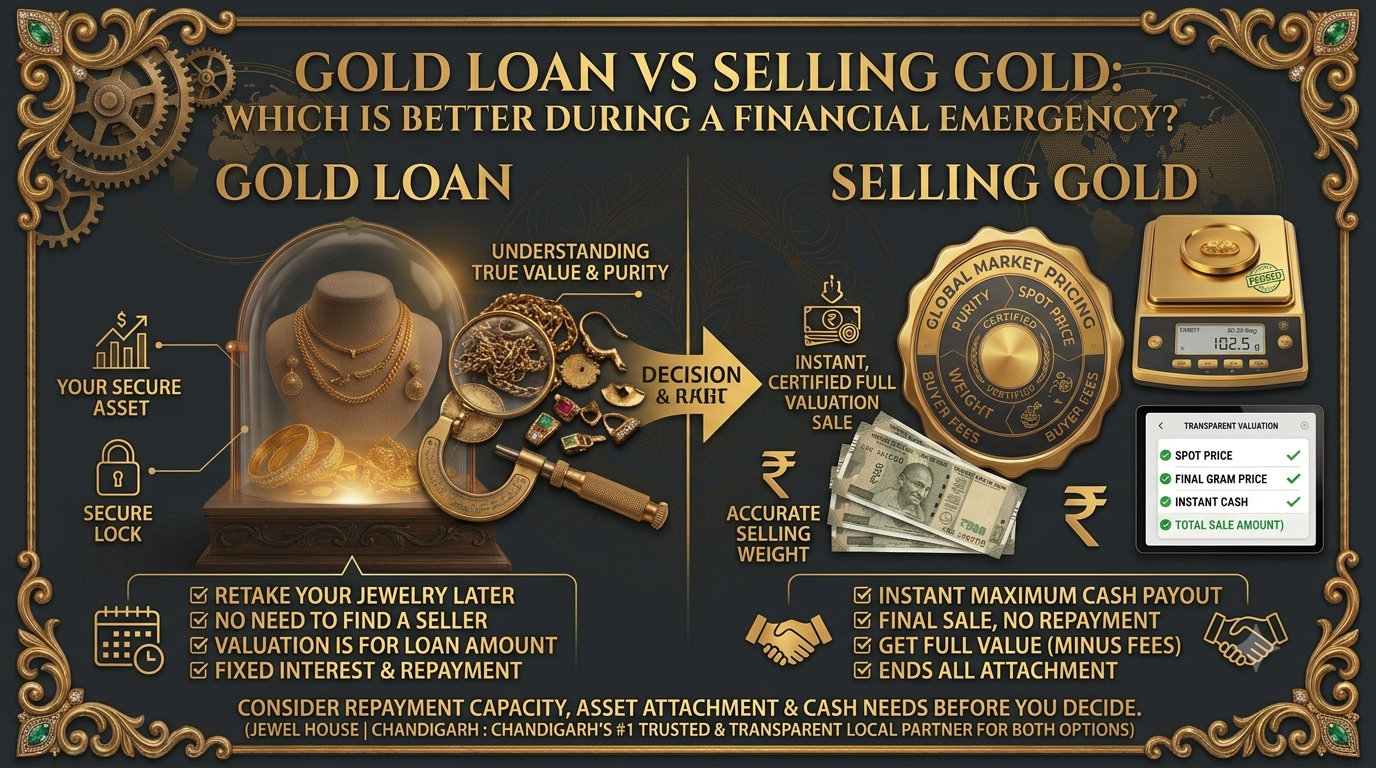
When money runs short, your gold becomes your biggest rescue. But then comes the real question: gold loan vs. selling gold, which one actually saves you? One hands you cash yet keeps your gold locked away, growing interest by the day. The other gives you the full worth of your gold with no strings attached.
In an emergency, every rupee and every hour matters. So should I sell gold or take a gold loan? This guide breaks down the costs, the hidden risks, and the smarter moves so you decide with a clear head, not with panic.
Gold Loan or Sell Gold: The Simple Difference
A gold loan means you pledge your gold and borrow money against it. The gold stays with the lender until you repay everything with interest. Selling gold means you hand over the gold once and walk away with cash that is fully yours. There is no repayment, no waiting, and no headache.
Think of a gold loan as renting cash. Selling gold is owning that cash outright.
What are the Disadvantages of a Gold Loan?
A gold loan may seem simple, but the details can be costly later. Here is what most people miss:
You only get a part of your gold’s value. As per the 2026 RBI rules, lenders give up to 85% for small loans (below ₹2.5 lakh), 80% for ₹2.5–5 lakh, and just 75% above ₹5 lakh. So gold worth ₹100,000 may fetch a loan of only ₹75,000–₹85,000.
Then comes interest. Gold loan rates in India today run anywhere from around 8% to 24% per year, depending on the bank or NBFC. Miss the tenure, and the pain multiplies.
The biggest danger? If you fail to repay on time, the lender can auction your gold, the same jewellery you fought so hard to keep. During an emergency, adding an EMI burden on top of your existing stress rarely helps.
Can I Get More Money by Selling Gold?
Yes, and this is where selling clearly wins. When you sell, you receive up to 100% of your gold’s real market value, not a discounted 75–85% loan against it. There is no interest on your money and no monthly EMI dragging you down.
Say your gold is worth ₹100,000. A gold loan hands you roughly ₹80,000, and you still owe it back with interest. Selling that same gold puts the full ₹100,000 straight in your pocket, done and dusted. That is a real difference of thousands of rupees of money you keep instead of paying away.
Selling Gold vs Gold Loan: The Real Cost
With a gold loan, you spend money to borrow it. With selling, you simply unlock the money already sitting in your gold.
A loan keeps a rope tied around you for months. Selling cuts that rope on day one. No repayment calendar, no penalty clauses, no fear of losing your ornaments to an auction. In a genuine crisis, such as a medical bill, business loss, or urgent family need, that peace of mind is invaluable.
Should I Sell My Gold in an Emergency?
If the emergency is big and you are unsure about repaying quickly, selling is usually the safer choice. A gold loan only makes sense when you need a small amount for a short time and are 100% certain you can repay before interest piles up.
But most emergencies are not neat or predictable. Job loss, hospital costs, or a sudden business setback can stretch for months. In such moments, taking on debt against your gold can quietly turn a small problem into a bigger one. Selling gives you clean, complete cash and a fresh start.
Which Is Better: Gold Loan or Selling Gold?
When you compare a gold loan vs selling gold, what truly matters is full value, zero interest, no repayment stress, and no auction risk. Selling gold clearly comes out ahead for most people during a financial emergency.
A gold loan is borrowing with a countdown clock. Selling gold is a clean full stop. So when the question is, “Should I sell gold or take a gold loan?” and you want maximum cash with minimum headache, selling wins.
Final Verdict
In the battle of selling gold vs. a gold loan, selling clearly gives you more money, more freedom, and far less stress during a financial emergency. No interest, no EMIs, and no fear of auction, just full value in your hands when you need it most.
If you decide to sell, choose a name you can trust. Jewel House Chandigarh has over 30 years of experience and pays the highest price for your gold. It doesn’t matter if it’s old, scrap, broken, coins, or jewellery. The process is simple, fully transparent, and safe. Visit Jewel House and turn your gold into instant cash with complete peace of mind.
FAQs
- Is it better to sell gold or take a gold loan?
Ans: For most emergencies, selling is better. You get the full value of your gold instantly, with no interest and no EMI. A gold loan only suits small, short-term needs where quick repayment is certain.
- What are the disadvantages of a gold loan?
Ans: You receive only 75–85% of your gold’s value, pay interest of roughly 8–24% yearly, and face EMIs. Worst of all, if you cannot repay in time, the lender can auction your gold. - Can I get more money by selling gold?
Ans: Yes. Selling gives you close to 100% of the market value, while a gold loan offers only a part of it as borrowed money. So selling almost always gives you more cash. - Should I sell my gold in an emergency?
Ans: If the need is large or your repayment is uncertain, selling is the smarter, stress-free option. It gives you complete cash today with no debt, no interest, and no risk of losing your jewellery later. - Is a gold loan compared to selling gold cheaper?
Ans: No. A gold loan adds interest and charges on top of what you borrow, so it costs you more over time. Selling has no such cost, the money you get is fully yours to keep. - What happens to my gold if I take a loan and cannot repay?
Ans: The lender holds your gold as security and can legally auction it to recover the dues. You may lose your ornaments completely, which is why selling is safer when repayment looks difficult.


